Jan Cizmar
Founder & CEO
What We Built
On the product side, this was a year of pushing deeper into AI and enterprise. The numbers tell part of the story: the Tolgee platform saw around 60 releases over the past twelve months, going from v3.109 to v3.167. The GitHub repository crossed 3,800 stars, gaining roughly 1,600 of them in 2025 alone. The JavaScript SDK moved from v6.0 to v6.4, and the CLI shipped five feature releases with branching support added along the way. Across all packages, we are seeing around 50,000 npm downloads per month. But the releases matter less than what they contained.
AI Translation: Playground and Glossaries
We launched the AI Playground, a place where teams can experiment with AI powered translations using their own context and prompts before committing to a workflow. You can test different models, compare outputs, and tune the results without touching production data.
Alongside that came Glossaries: define your terminology once and have it fed directly into the AI translator. If you have a product term that should never be translated, or a phrase that must always render a specific way in German, the AI now knows about it. Consistent terminology across every language, automatically.
Translation Suggestions
In August we shipped Translation Suggestions: a way for team members to propose translation improvements while giving reviewers full control over what actually gets published to production. Reviewed production strings stay protected. Teams decide what goes live, not individual contributors working in isolation.
Format Support
Tolgee can now handle almost any localization format your project might use:
Apple String Catalog (.xcstrings) for iOS and Mac
.NET RESX format
XLSX import and export
XLIFF with proper tag escaping
Mobile and Game Dev
We shipped a major update to the Unreal Engine plugin, bringing native integration with the Localization Dashboard and real time translation directly inside the engine. The Figma plugin got variable and plural support, so dynamic strings now work across the full design and development workflow.
ISO 27001 Certification
One of the less glamorous but genuinely important things we did this year: we got ISO 27001 certified. For a startup sized team, this is not a small undertaking. Weeks of work, documentation, audits, and process changes. But it matters for the customers who need to know their data is handled seriously. We wrote about the lessons learned in a dedicated blog post.
Intercom and AI Support
We integrated Intercom this year, along with its Fin AI agent. It has been handling a significant portion of our support questions correctly and fast, without a human having to jump in. For a small team, that kind of leverage matters a lot.
MCP Server: A Step Toward AI Native
Earlier this year we launched an MCP (Model Context Protocol) server for Tolgee. This means AI coding assistants like Claude Code, Cursor or can now interact with Tolgee directly from inside your IDE: search keys, create new ones, set translations, trigger machine translation, list project languages.
It is not a revolutionary feature on its own, but it is a meaningful step toward Tolgee being a natural part of an AI native development workflow. We shared the thinking behind the toolset design and some of the architectural decisions in a post on LinkedIn.
We Started Shipping More Predictably
For a long time, we were bad at delivering things on a predictable schedule. We would estimate two weeks and ship in six. Each quarter, we would just move the same roadmap items forward. Promising the same things we promised last time.
About two months ago we started using Shape Up, the methodology from Basecamp. Work is structured into fixed length cycles with a defined appetite for each project. No endless backlogs, no sprints that do not mean anything. Just: here is the problem, here is what we are willing to spend on solving it, ship it.
It is early days, but the results are already visible. In our last cycle, Dmitrii Bocharov delivered three items on time: the MCP server, key archiving, and a character length limit at the key level. When I asked him to pick up a side task partway through, he said no. He needed to stay focused on what he had committed to. That is exactly what a well-run cycle looks like. Full focus, no interruptions.
It is worth noting that working with Claude is starting to change this a bit. Engineers sometimes have spare time during a cycle when the AI is handling part of the work. That creates interesting new questions about how we structure cycles going forward.
We did not deliver everything we set out to do this year. But we have a process now that makes it more likely we keep improving.
We Showed Up
One of the things I am most proud of this year: we got out from behind our laptops and went to meet developers where they are.
With support from the CzechInvest Internationalization Programme, a government initiative supporting Czech tech startups going global, we attended five major developer events:
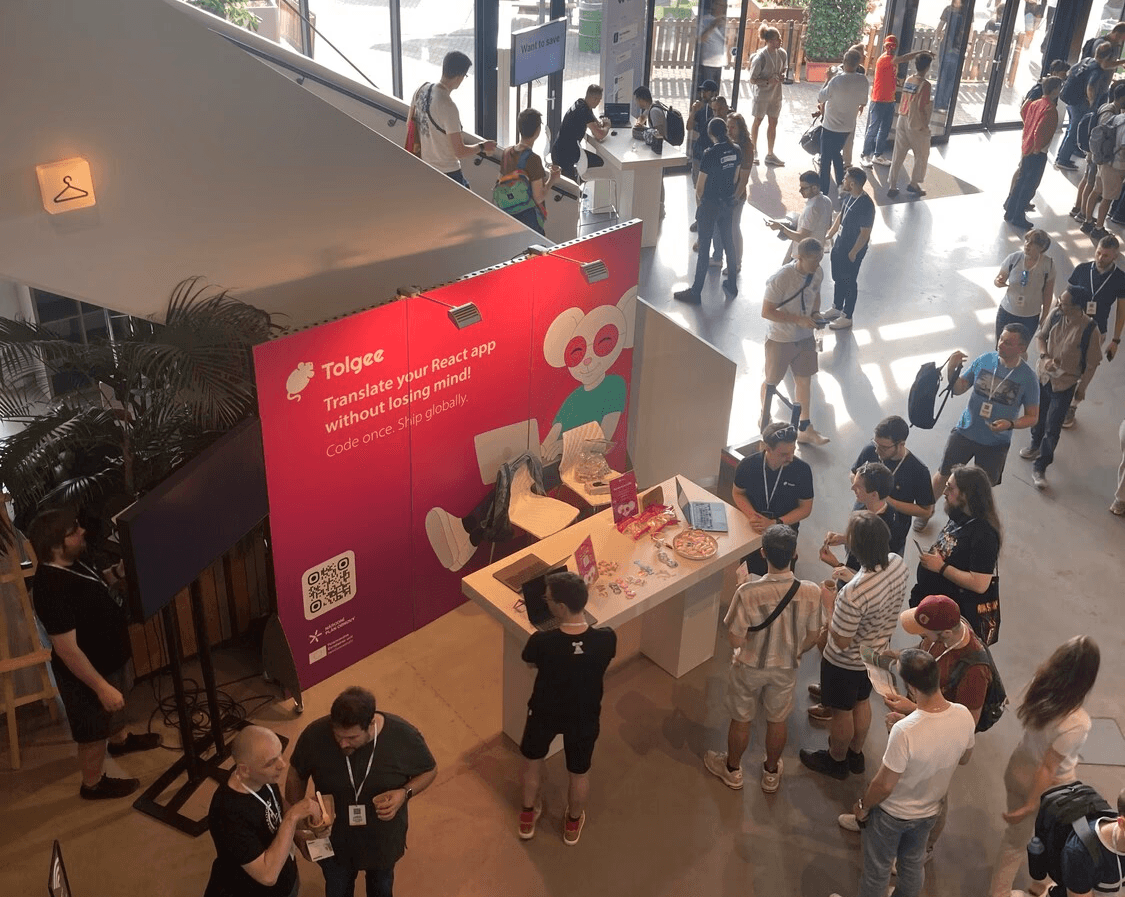
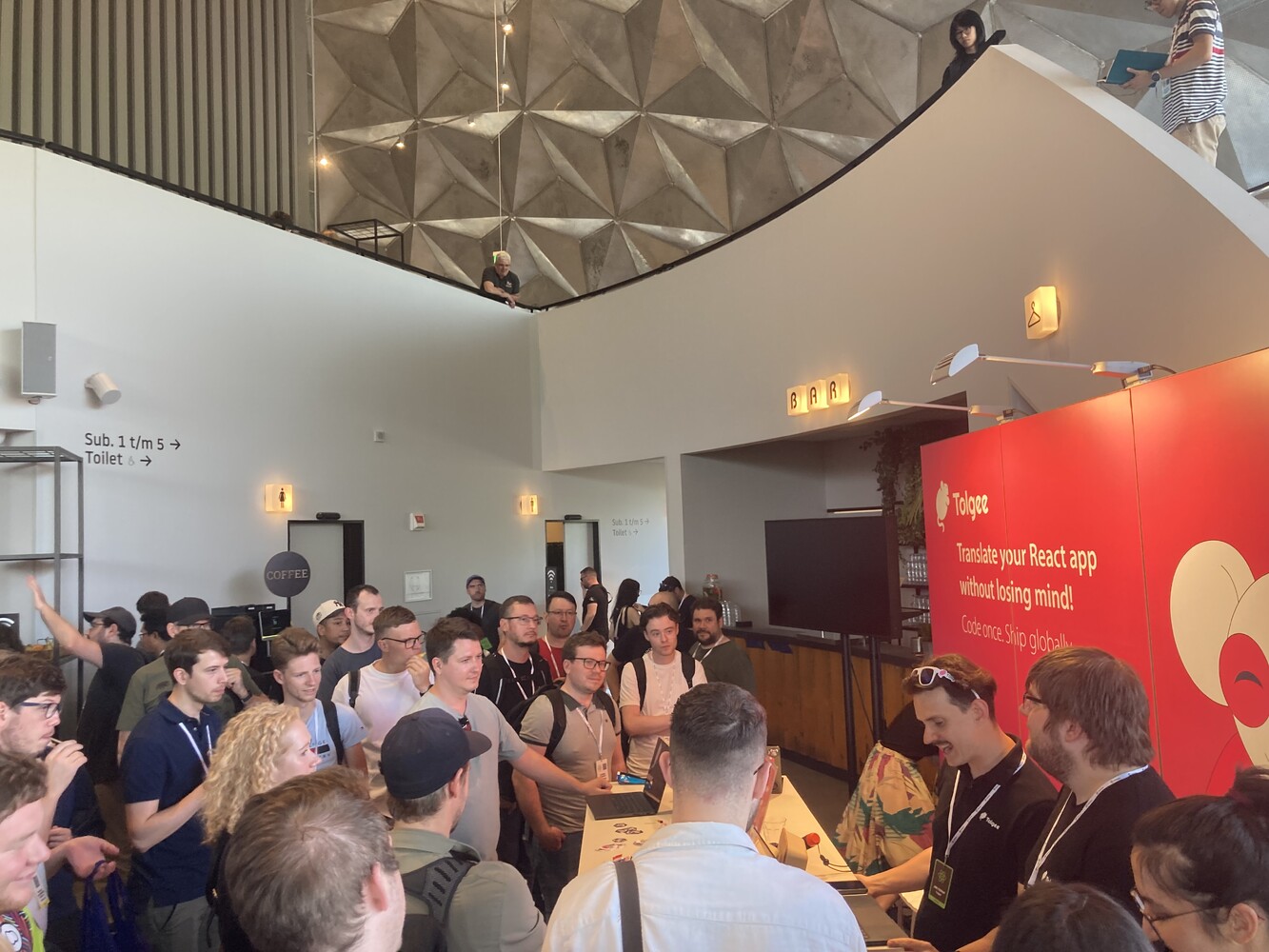
React Summit, Amsterdam (June). The biggest React conference in the world. We were an official partner and built a custom demo: a real time voting app showing Tolgee's translation features live.
WeAreDevelopers World Congress, Berlin (July). 15,000+ developers. I gave a talk on AI localization in context and what it actually means for developer workflows.
Open Source Summit Europe, Amsterdam (August). The Linux Foundation's flagship OSS event. As an open source project, this is our home turf.
Droid+Fluttercon, Berlin (September). The biggest Flutter and Android gathering in Europe. We have Flutter and Android SDKs, so this was the right room to be in.
Two moments from those events stuck with me. At React Summit, our booth was positioned right at the entrance to the main conference room. We talked to an enormous number of React developers, sharing ideas, getting feedback, having real conversations with the people who actually use tools like ours every day. That energy was something you cannot replicate online.
Our boot at React Summit
Announcing the raffle winners at React Summit
At Droid+Fluttercon, something unexpected happened: developers kept walking up to our booth and telling us they already use Tolgee in their Android and Flutter apps. We had no idea we were that popular in the mobile world. It was a genuine surprise, and a good reminder that your community is sometimes bigger and broader than you realize.
We also participated in Alconost's podcast, and in February 2026 we sponsored meet.js Wroclaw for their 15th anniversary. It was a smaller, club venue compared to the big conferences and a lot of fun to present at. Wroclaw is a beautiful city and the community energy was warm and genuine.
Real-World Impact
This year we published a case study with Curipod, an EdTech platform used by 500,000+ teachers across the US.
"We were seeing hundreds of React crashes per day from browser translation. Tolgee brought that number to zero overnight." Drew Hoover, Curipod
After implementing Tolgee, Curipod shipped in 22 languages, eliminated around 300 daily React crashes, saw 143% year-over-year usage growth in Arabic speaking markets, and got featured by the Saudi Arabian Ministry of Education.
The impact goes beyond commercial software. Tolgee is free for open source projects, and this year a number of them put that to use. OpenMarch, a free drill writing app for the marching arts, is using Tolgee to bring its software to international audiences. LiftLog, an open source workout tracker available on iOS and Android, ships localized with Tolgee. OpenNutriTracker, a nutritional tracking app with over 1,200 GitHub stars, is another.
Several NGOs have also made Tolgee part of how they reach people across languages. Climate Fresk , an organization that teaches climate science through collaborative workshops, uses Tolgee to support 45+ languages across its platform. They have now reached 2 million participants in 167 countries with 90,000+ volunteers. And Pecha, a platform for Buddhist scriptures, uses Tolgee to make ancient texts accessible in Tibetan and other languages that rarely get first class treatment in localization tools.
There is something that matters to us about being useful to projects like these. Localization is expensive and time consuming, and the organizations doing the most important work in the world often have the fewest resources to deal with it. Tolgee being genuinely useful to them is not a marketing point. It is the whole point.
The Team Changed
Year five was the year the Tolgee team changed the most. I want to be honest about it, because I think founders do not talk about this enough.
We made some difficult decisions about team members. Letting someone go is never easy, especially people who built things alongside you from early on. I genuinely believe these were the right decisions for the company, but right does not mean painless.
The hardest thing we navigated this year was parting ways with one of our cofounders. I will not pretend it was easy. But we reached an agreement that works for both sides, and Tolgee can continue without serious disruption. A big thank you to our investors at Flying Founders (Zdenko Zvada, Michal Truban) for the support and guidance through this whole episode. It mattered more than I can express.
I want to be clear about something: the people we parted ways with are talented, and I value the work they did for Tolgee. These were not always decisions about competence. Often they were decisions about fit. Every team has a specific culture, a specific way of working, and not every talented person thrives in every environment. The people who left will find places where they fit well and do great work. I genuinely believe that.
What came out the other side of all these changes is a team I am genuinely proud of. We are building something I would call an elite team: small, focused, high trust. Good communicators, hardworking, dedicated to building something unique. Every person on the team is delivering real results and cares about the product they are building. That matters more to me than headcount.
Thanks to all who contribute to Tolgee internally or externally. Especially Marketa Cizmar, Zuzana Odstrcilova, Jiří Kuchyňka, Daniel Križan, Dmitrii Bocharov, Tereza Boháč, Barbora Urbanová, Nico Hülscher, Alexandru Oprea.
What We Are Building Next
The theme for year six is Agentic Localization. The goal is not just to give AI the ability to create translations, but to give agents the full ability to validate, review, and improve localized versions of software without a human in the loop for every change.
One part of this is an integration between AI agents and the Tolgee JavaScript SDK, so that an agent can render translated strings in the actual context of a running app and review them there. Not just "does this text make sense in isolation" but "does this button label still fit when rendered in Arabic, in this layout, at this font size." That is a fundamentally different kind of quality check.
But the SDK integration is only one piece. Agentic Localization touches the whole workflow: how keys are created, how context is passed to AI, how reviewed strings are protected from being overwritten, how agents hand off to humans when confidence is low. We are working across all of these.
At the same time, we want to make the human in the loop experience better too. When a person does review translations, they should be doing it in context rather than in a spreadsheet. Better in-app QA tools, better review workflows, so human oversight is faster and more meaningful when it happens.
Fifth year of Tolgee TL;DR:
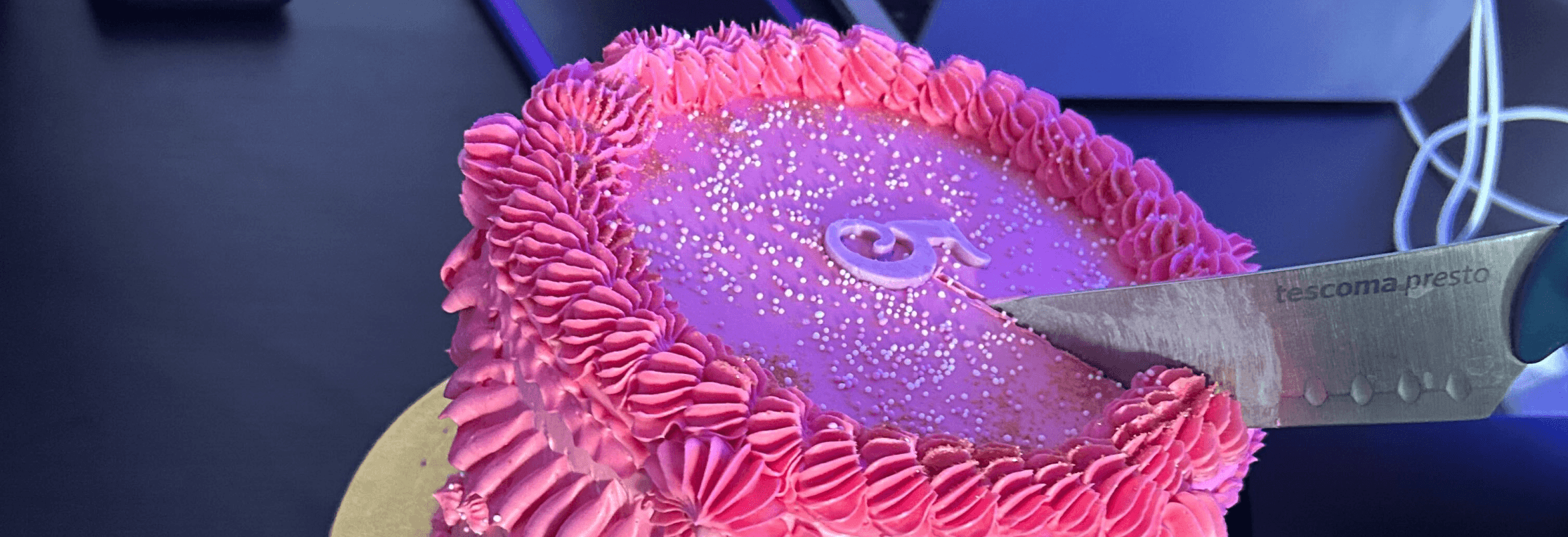
Five years of Tolgee. A year of shipping things we are proud of, of showing up at conferences and talking to developers directly, of making hard decisions about the team, and of starting to find a process that actually works.
We are still open-source, still building for developers first, still building in public.
Thank you to our customers for trusting us, to the team for an incredible year of work, to every contributor who filed an issue, submitted a PR, or helped shape the product, and to everyone who has been part of this journey in any way. You are the reason we keep going.